

But one skipped step can leave your skillet sticky, flaky, or rusty before you even get to flip your first egg. If you want cast iron that performs like a dream, you’re in the right place.
✨ Need a deeper dive? Check out the Delish full guide here.
🛡️ Cast Iron Seasoning: Your Pan’s Superpower
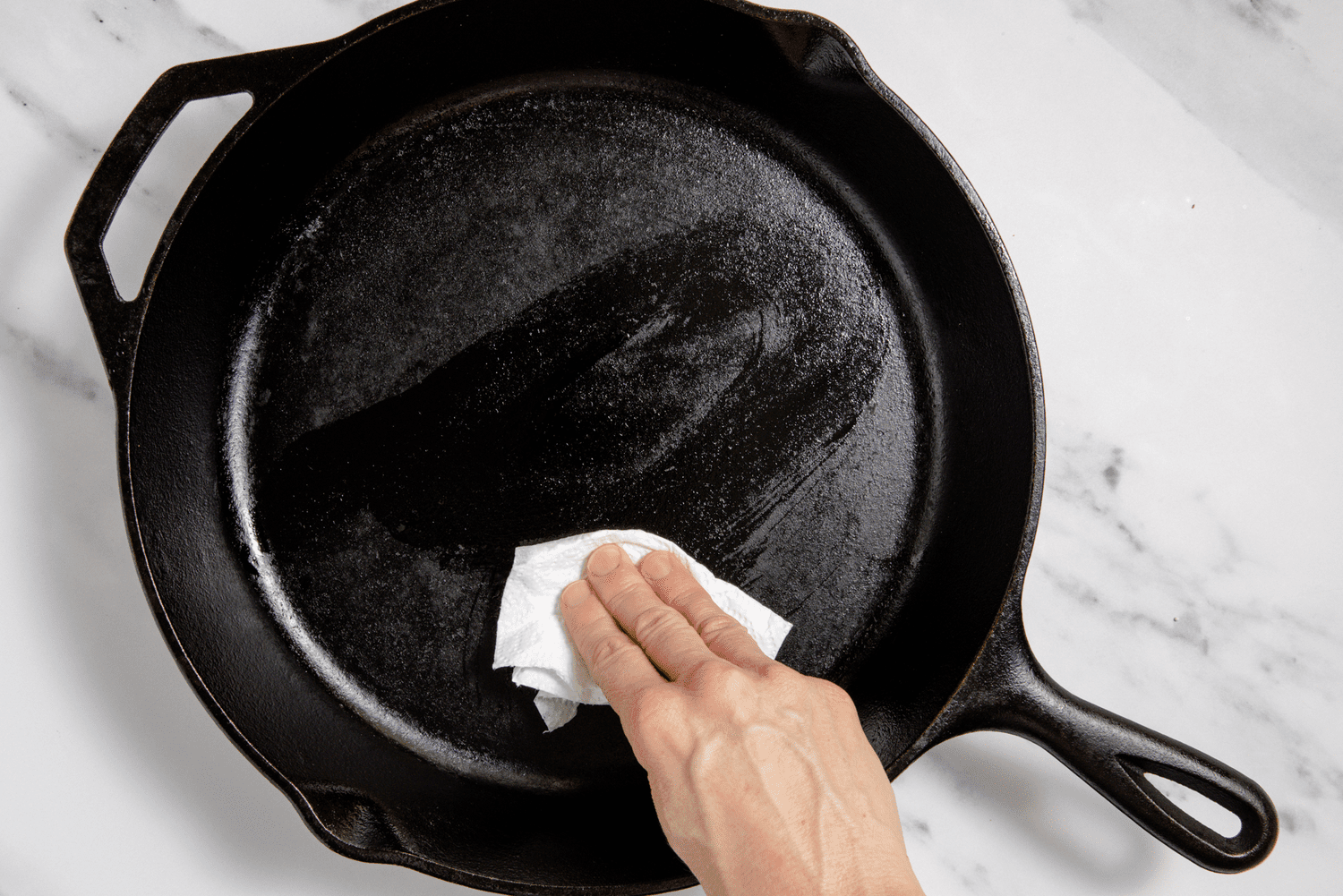
Seasoning is the secret sauce that transforms raw iron into the naturally non-stick, flavor-packed cookware chefs swear by. It’s not just a coating—it’s a shield that keeps rust away, improves browning, and gives your dishes that irresistible sizzle.
🧂 What exactly Is Seasoning?
Think of seasoning as your skillet’s personal body armor: a layer of oil that’s baked into the surface until it becomes a smooth, durable, non-stick finish. Over time, this finish grows stronger with every use.
➡️ Pro Tip: A well-seasoned skillet should feel smooth—not sticky. If it feels tacky, you’ve used too much oil. Buff harder or restart the seasoning step!
Without proper seasoning, cast iron becomes fussy and flaky—more foe than friend. But with the right care? It’s a generational treasure.
✨ Perfecting Cast Iron Seasoning
Nailing that perfect seasoning isn’t a mystical kitchen magic—it’s a sequence of easy, effective steps. Each builds on the last, bringing you closer to a splendidly seasoned skillet that’s always ready for action. 🧑🍳
🧽 1. Soak, Scrub, Rinse
Start fresh. Give your skillet a warm-water bath to loosen stubborn bits. Then scrub with a stiff brush or scrub pad.
No soap, please—it can strip away those hard-earned layers of seasoning.
➡️ Pro Tip: If your pan is really stuck-on, heat it for 1–2 minutes to soften the residue before scrubbing. Heat is your helper here!
Rinse well and inspect your surface—it should look clean and matte.
💨 2. Dry (completely!)
Water is cast iron’s mortal enemy. Even a tiny droplet can start rusting before you know it.
Pat your skillet dry with a towel, then set it over low heat for a few minutes to evaporate hidden moisture.
➡️ Pro Tip: If your pan suddenly turns grayish after drying, don’t panic—that’s normal raw iron showing where seasoning has worn thin. Your next seasoning step will fix it beautifully.
🧻 3. Oil and Buff
Now the fun part: oiling!
Drizzle a small amount of vegetable oil or melted shortening, then buff… and buff… and buff some more. Coat the entire pan—inside, outside, handle, rim.
➡️ Pro Tip: If your paper towel feels almost dry when you’re done, that’s PERFECT.
Too much oil = sticky, uneven skillet. Less is more.
🔥 4. Preheat and Bake
Heat your oven to 450°F. Place your skillet upside down on the middle rack so excess oil drips off. Bake for one hour, then let it cool inside the oven.
This is where the chemistry happens: the oil transforms into a hard, slick coating called polymerization—aka cast iron’s glow-up moment.
➡️ Pro Tip: Want a darker, shinier finish? Do 2–3 rounds of baking. Thin layers build the strongest seasoning.
👨🍳 Additional Tips
The more you cook with your cast iron, the better it gets. Every use adds a micro-layer of seasoning.
Avoid acidic foods (tomatoes, vinegar) in a newly seasoned pan—they can strip the finish.
Don’t stress small rust spots—they buff off easily and are a natural part of cast iron life.
Patience truly is a seasoning ingredient. Give your skillet time to evolve.
Cast Iron vs Enameled Cast Iron Skillet
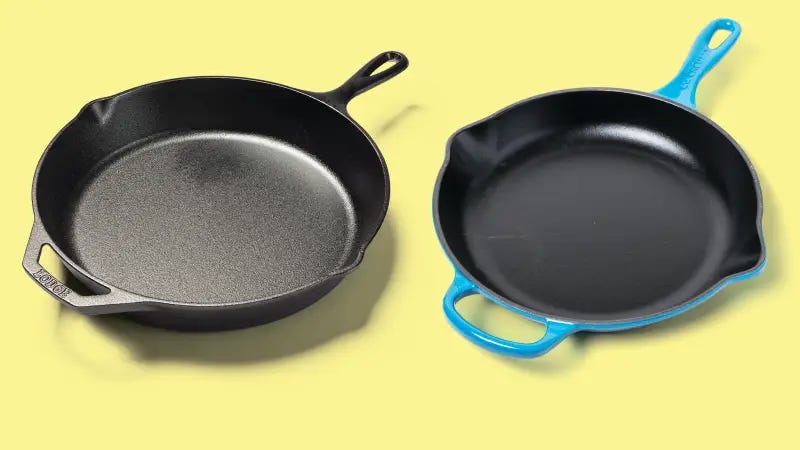
Like choosing between pie or cake—there’s no wrong answer, just delicious options.
🍳 Heat Conduction & Retention
Traditional cast iron keeps a steady, powerful heat—ideal for searing and frying.
Enameled cast iron warms beautifully too but may cool slightly faster.
🎭 Performance
Cast iron = non-stick when seasoned well.
Enameled = non-stick without the maintenance—but not as buildable long-term.
Bonus: Enameled won’t react with acidic ingredients!
🎨 Versatility
Cast iron glides from stovetop to oven to campfire.
Enameled can do most of the same but is better suited to indoor cooking and gentle handling.
⏳ Longevity
Both are cooking companions for life, but with a touch of TLC, traditional cast iron may outlast the enamel party. While enamel might chip or crack over time, a seasoned cast iron can hand down stories from generation to generation.
🧼 Care and Maintenance
Traditional: seasoning, careful cleaning, light oiling.
Enameled: easier breezier cleanup—no seasoning required.
💰 Price
Enameled pieces can be investments.
Traditional cast iron gives gourmet performance on a pantry budget.
👨🍳The Final Sear
Seasoning your cast iron skillet isn’t just maintenance—it’s a love letter to your future meals. With the right steps and a little care, you’ll have a pan that turns everything—from sunrise pancakes to sizzling steaks—into kitchen triumphs.
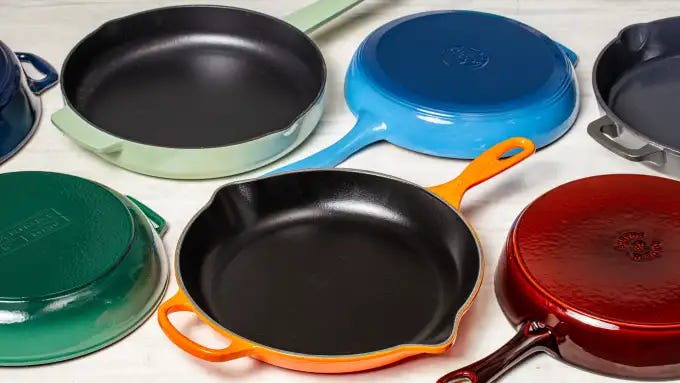
Whether you choose traditional cast iron or enameled, knowing their quirks and strengths will make you a more confident cook. Now go give that skillet its moment to shine… and enjoy the delicious journey ahead. ✨

🍽️ Now that your cast-iron skillet is seasoned to perfection, why not break it in with a warm, cozy batch of Shepherd’s Pie — find the recipe here to get started.