

Each type of sugar brings its own personality—flavor, texture, and chemistry—to the table. From the caramel hug of brown sugar to the silky finish of powdered sugar, the options are endless. So grab a spoon, let’s sprinkle some knowledge, and explore the many ways sugar sweetens up our culinary creations.
🍚 The Sugar Line-Up
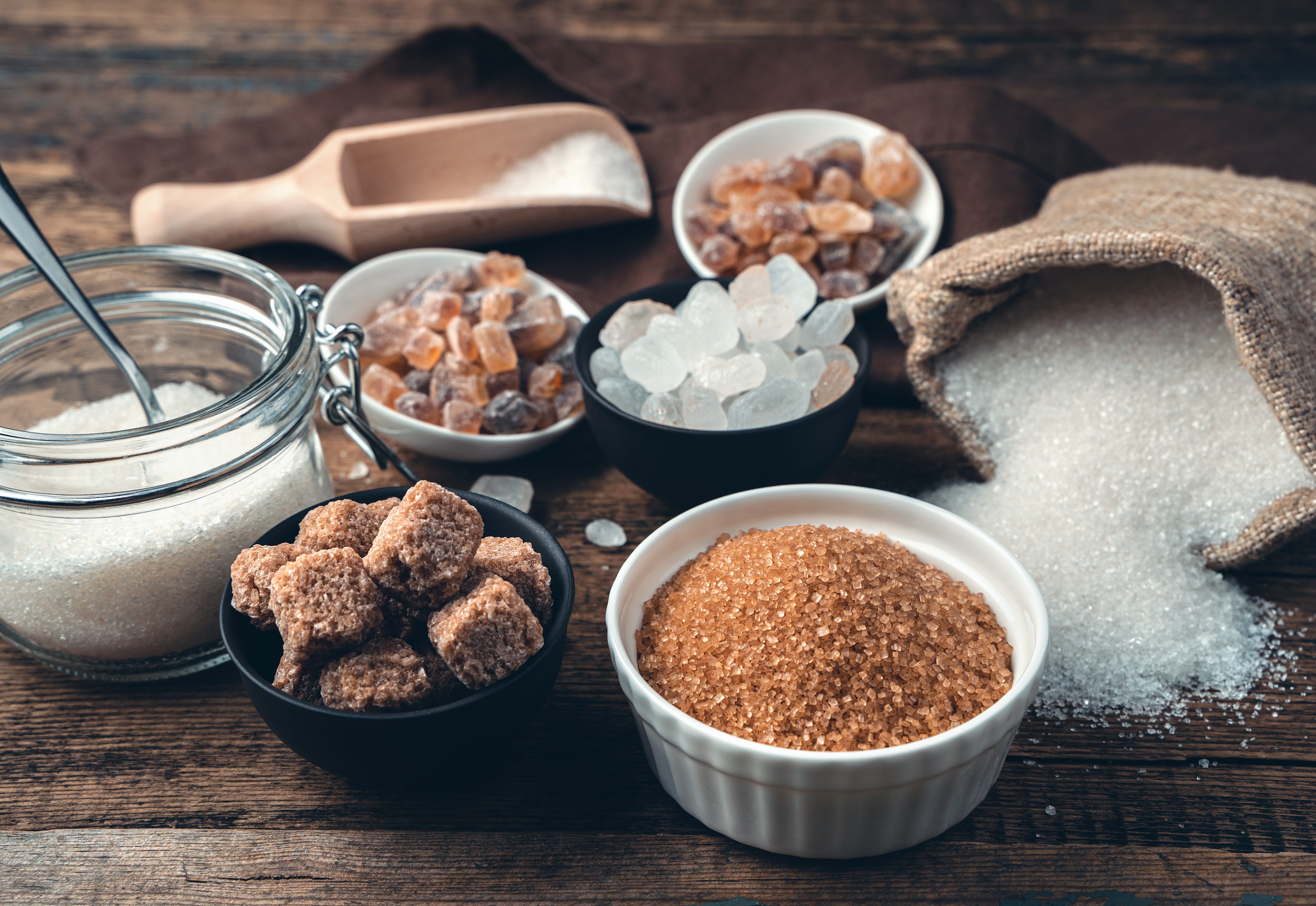
Not all sugars are created equal. Each has its own superpower, whether that’s structure, tenderness, or a glossy finish. Knowing which one to use can take your baking from “good” to “grand finale.” Let’s break it down.
✨ Granulated Sugar: The Everyday Hero
The classic white crystals you probably reach for first. It’s versatile, dependable, and perfect for creaming with butter to trap air—giving cakes and cookies their light, fluffy bite. Stick with granulated when texture matters. Coarser sugars just won’t do the same job.
💡 Pro Tip: Always beat granulated sugar with softened butter for at least 2–3 minutes. This ensures it dissolves evenly and traps air for a tender crumb.
🌟 Caster Sugar: The Quick Dissolver
Also called superfine sugar, caster’s tiny crystals dissolve lightning-fast. That’s why bakers love it for meringues, soufflés, and sponge cakes where smoothness and lightness are key. Bonus: it blends beautifully into cold drinks and cocktails, too.
💡 Pro Tip: If you can’t find caster sugar, pulse regular granulated sugar in a food processor for 30 seconds—it’s a DIY baker’s hack!
❄️ Powdered Sugar: The Silky Finisher
Finely ground (with a touch of cornstarch to prevent clumps), powdered sugar is the go-to for frostings, glazes, and that snowy dusting on top of brownies or doughnuts. It melts seamlessly into icings for that professional, glossy look.
💡 Pro Tip: Sift powdered sugar before using in icings or buttercreams. It prevents lumps and gives you that silky-smooth finish every time. In a pinch, grab a never opened plastic bag and skip the sifting step.
🍯 Brown Sugar: Sweet with a Molasses Kiss
Moist, chewy, and packed with flavor, brown sugar comes in light and dark varieties.
Light brown sugar = subtle caramel, great for cookies or quick breads.
Dark brown sugar = deeper molasses notes, perfect for gingerbread or spice cakes.
Both add richness and chewiness that granulated sugar just can’t match.

💡 Pro Tip: If your brown sugar hardens, don’t toss it! Place a slice of bread or apple wedge in the container overnight to restore its moisture. Want to skip the store run altogether? Make your own! Just mix granulated sugar with molasses for light or dark brown sugar in minutes. See The Tip Jar: DIY Brown Sugar
🌴 Coconut & Palm Sugar: Nature’s Caramel
Made from the sap of palms, these natural sweeteners bring a hint of caramel with a slightly grainy texture. Lower on the glycemic index, they’re popular in “better-for-you” recipes. Try them in oatmeal cookies or banana bread for a nutty, toasty depth.
💡 Pro Tip: Coconut sugar doesn’t cream with butter as well as white sugar. Pair it with a touch of granulated sugar when baking cakes for better lift and texture.
🍁 Liquid Sugars: Flavor + Moisture
Honey, maple syrup, and agave are more than sweet—they bring distinct flavors and extra moisture. Just remember: when swapping liquid sugar for granulated, reduce other liquids to keep your batter balanced. They shine in muffins, pancakes, and quick breads.
💡 Pro Tip: Warm honey or maple syrup slightly before mixing—it pours and blends more easily, especially in batters.
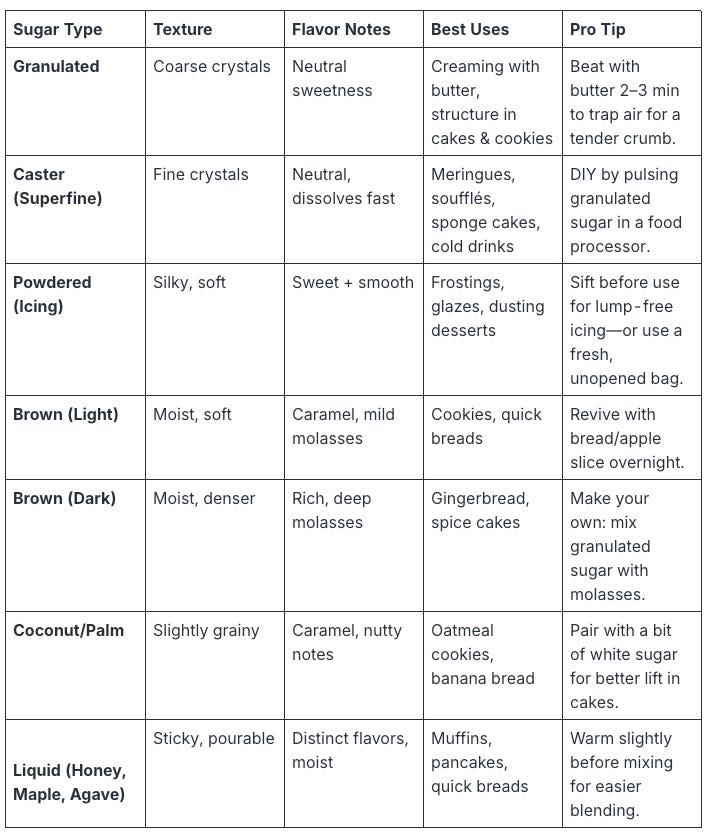
🍭 Quick Reference: Sugar Guide
🎂 The Takeaway
Sugar isn’t just “sweet”—it’s a multi-tasking powerhouse that affects structure, texture, moisture, and flavor. By picking the right sugar for the job, you’re not just baking, you’re creating magic. Next time you reach into the sugar jar, think beyond “how sweet” and ask: what role will this sugar play in my bake?
🍂 Ready to put your sugar smarts to the test? Try my Pumpkin Spice Muffins with Maple Pecan Streusel—a cozy bake that shows off the caramel warmth of brown sugar in every bite.
